

Ephesus Half-Day Tour
The essential marble city, door to door — the honest choice for tight schedules.

Nine stops across Ephesus and Selçuk in one private day: the ancient city from two viewpoints, a living mosque of 1374, the museum room by room, a Wonder of the Ancient World and a home-cooked lunch. Every entrance ticket and the meal are already in the price.
This is the fullest day we run: nine stops across Ephesus and Selçuk, with every entrance ticket and the lunch already inside one price. You see the ancient city from its two great viewpoints and stand at the road-gate it was entered by. You look up at the basilica raised over St John's tomb, take your shoes off inside a living mosque of 1374, and walk the old lanes of the Turkish town beside the ruins. Then comes the Ephesus Archaeological Museum, room by room, where the statues, the kitchens and the gladiators of the city actually live — and after it the site of the Temple of Artemis, one of the Seven Wonders of the Ancient World, and a table where local women do the cooking. No other tour on this site puts that many pieces of the region into a single day.
One thing the day deliberately does not do is walk you a kilometer and a half down the marble streets inside the archaeological site, and that is the design rather than an omission. The city is seen whole from above, from the Mary viewpoint where the entire plan of it lies below you, and then met piece by piece in the museum that holds what was dug out of it. It is also exactly why the day covers so much: the time the marble walk would take is spent instead on the saints' sites, the Turkish town, a Wonder of the Ancient World and lunch. If you want the marble streets as well, we will gladly pair this day with our half-day highlights tour on another morning.
The name is the day. Saints, because we begin with Mary and John, whose last years brought the earliest Christianity to this coast. Sultans, because Selçuk — named after the Seljuks — is a Turkish town whose great mosque was raised by the emirs of Aydın in the 1370s, in the Seljuk tradition, a century before Columbus sailed. Flavors, because a home-cooked Aegean lunch is not a footnote to the day: it is the last stop, and for many guests the one they talk about longest.
Your hotel lobby in Kuşadası, Selçuk or İzmir, or the gangway inside Kuşadası cruise port. Your guide waits with a sign showing your name.
You are dropped back wherever you were collected — at the port, with a comfortable buffer before all-aboard.
The day itself is spent in and around Selçuk, the town beside the ruins — about 25 minutes (19 km) from Kuşadası port and an hour from İzmir — with two viewpoints over Ephesus Ancient City on the way. Exact timings are confirmed in writing before your date.
This is a private, door-to-door day: your guide and driver come to you. No address to navigate to, no meeting point to hunt for, no group to catch up with.
Nine places between the pickup and the drop-off, with the hottest part of the day spent indoors and not a ticket queue in sight. The vehicle brings you to the door of every one.
Your guide and driver collect you at your Kuşadası, Selçuk or İzmir hotel, or at the gangway inside Kuşadası cruise port, with your name on a sign.
A short drive up into the pines to the great statue of Mary beside the Upper Gate of Ephesus, and the finest view in the region: the whole ancient city laid out below you, the valley beyond it, the sea beyond that. Here, in the shade, your guide tells the story of the city — and of how and why the Virgin Mary and St John the Evangelist came to spend their last years in Ephesus. No ticket, no queue, a few gentle steps.
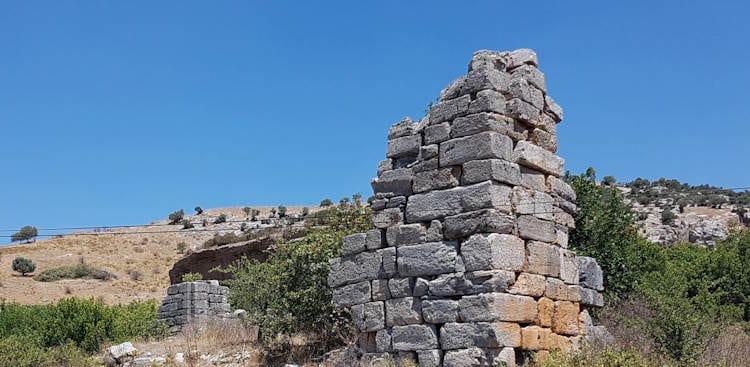
A minute down the road we stop at the Magnesian Gate, the eastern entrance of Ephesus, where the road from Magnesia came into the city. Paul, arriving overland from the interior, almost certainly walked in here, and John lived his last decades in the city behind it. When Cleopatra wintered in Ephesus with Mark Antony in 33–32 BC she came by sea, with two hundred ships — your guide will point out where the harbor used to be. It is a level, quiet stop with almost nobody at it, and it is where the ancient city stops being a view and becomes a place.
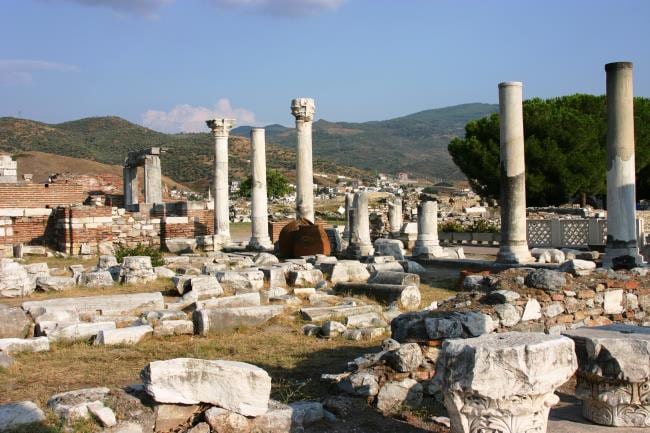
Down into Selçuk, to stand in front of the great basilica on Ayasuluk Hill that the Emperor Justinian raised over John’s tomb in the sixth century. From the viewpoint your guide tells John’s story — his years in Ephesus, the Gospel tradition places here, the tomb beneath the altar — with the fortress above you and the whole valley below.
See: Basilica of St John
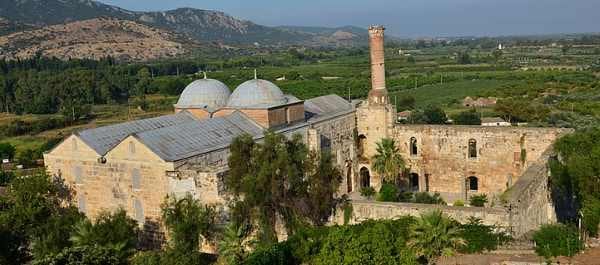
A few minutes downhill on foot to the İsa Bey Mosque of 1374, raised for İsa Bey, emir of Aydın, in the Seljuk tradition — with columns and marble carried down from Ephesus and from the basilica above. We take off our shoes at the door and go in. Nobody has roped this off for visitors: the call to prayer still sounds here five times a day, and in the cool, quiet hall your guide explains Islam, the building, and what happens in a mosque on an ordinary weekday.
On through the old quarter to the small fourteenth-century Kılıçarslan Mosque, which we admire from the lane, and to the old Turkish bath of the emirs’ centuries, its domes still shaped for the heat they once kept in. Almost nobody with a guidebook comes down these lanes; they are level, shaded and yours.
We wander the lanes of traditional houses between the monuments — stone walls, tea gardens, storks nesting on the old aqueduct in season, the everyday town that lives beside the ruins. Level and unhurried — this is the one short downhill stretch of the day, with benches on the way.
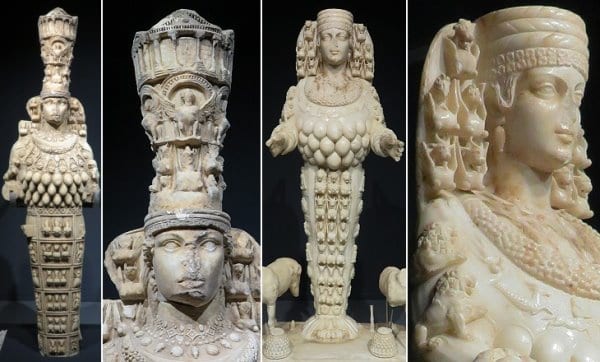
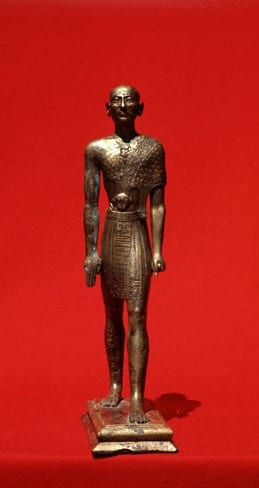
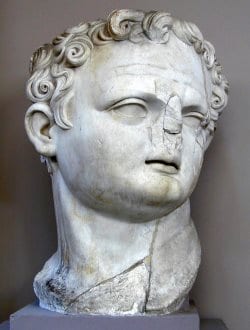
A full guided tour, room by room, of the museum where the treasures of Ephesus actually live: both great statues of Artemis of Ephesus, the bronze Egyptian priest, the fountain group of Odysseus and the Cyclops, the sarcophagi, the head of Socrates, the little Eros, the finds from the Terrace Houses and the gladiators. Cool, quiet, and paced by you.
A short drive to the ruins of the Temple of Artemis, one of the Seven Wonders of the Ancient World. With the statues fresh in your mind, the single re-erected column and the marshy platform suddenly make sense — and your guide will tell you how a temple nearly four times the size of the Parthenon came to vanish almost entirely.
See: Temple of Artemis
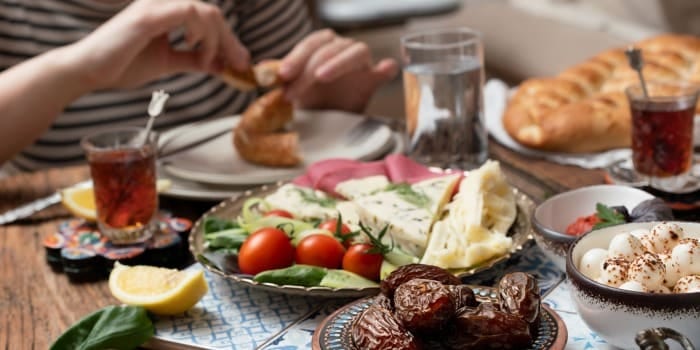
We finish where every good Turkish day finishes: at the table. Your lunch is cooked by the women of a local cooperative, from whatever the morning brought, the way their mothers cooked it — and it is served in the company of local artisans, so you can watch a craft take shape between courses. Nobody hurries you and nobody presses you to buy; the tea keeps coming and so does the time.
We deliver you to your hotel door, or to the ship with time in hand before all-aboard. Between pickup and drop-off you have not opened your wallet once — which was rather the idea.

Tap any photo to open it full size. (9 photos)

Whichever ship brings you to the Aegean, our guides meet you at the gangway with your name on a sign.

Gezginol holds a priority pass with the sites we visit. Your guide collects your tickets before you arrive, so you never stand in a ticket queue — you walk to the gate and go in.
And on this tour every ticket is already inside your price. We add nothing to the official ticket prices — the Ministry of Culture and Tourism sets them, we buy them ahead of you at that exact amount, and here they are simply part of the one price you were quoted. There is no gate where anyone asks you for money.
This is one of the real, unglamorous reasons a guided day beats a self-guided one in high season: on a busy August morning a ticket queue alone can take longer than a museum room. On this day you never see one — your guide walks in with the tickets in hand, and you walk in behind.
Yes — and on this tour you never see a ticket window at all. Gezginol holds a priority pass, your guide collects every ticket before you arrive, and because all of them are already inside your price there is nothing to pay at any gate. We add nothing to the official ticket prices: you simply do not have to think about them.
Nine places, in this order: the Virgin Mary statue at the Upper Gate, with the whole ancient city below you; the Magnesian Gate; the Basilica of St John from its panoramic terrace; the inside of the living İsa Bey Mosque of 1374; the Kılıçarslan Mosque and the old Turkish bath from the lane outside; the old houses of Selçuk; a full guided tour of the Ephesus Archaeological Museum; the site of the Temple of Artemis; and lunch cooked by local women at their cooperative, with a visit to local artisans. Every ticket on that route and the lunch are already in your price.
As long as you need. Because the day is private it stretches or shrinks around you: leisurely if you like, or brisk enough to fit a cruise call, planned around your ship’s all-aboard time. Your pickup time is agreed when you book and confirmed in writing.
Yes — your group only, with your own licensed guide and your own vehicle and driver. Nobody waits for anyone outside your own party, and the plan bends to whoever is in the car: grandparents, toddlers or both.
Yes and yes. A private air-conditioned vehicle with a professional driver is part of the price, and it takes you to the door of every stop. We collect you at your hotel in Kuşadası, Selçuk or İzmir, or at the gangway inside Kuşadası cruise port with your name on a sign, and return you to the same place. Pickup from an İzmir hotel is priced privately for your group — ask us for your quote.
Yes — every ticket on the route is, the Ephesus Archaeological Museum included, inside the single price we quote you. Gezginol holds a priority pass, so your guide already has the tickets in hand and you never stand at a ticket window. We add nothing to the official ticket prices; on this tour they are simply already inside your price, so there is no gate where anyone asks you for money.
Yes. Lunch is cooked by local women at their cooperative — whatever is local and fresh that day, served with water and tea — and it is included in the price. Tell us about vegetarian, vegan, gluten-free or other needs when you book and the kitchen will cook for them.
It is designed for them. The walking is short, flat and shaded, there is a seat at every stop, the vehicle brings you to the door of each one, and half the day is indoors in the mosque, the museum and at the lunch table. If any part is too much on the day, the guide simply shortens it — that is what a private day is for.
Very much so. Children get statues with stories (a goddess covered in eggs, a cyclops being blinded, gladiators), a real mosque to tiptoe into, cats in the old lanes and a lunch where nobody minds a fussy eater. The walks are short and the day is paced by the youngest person in it. Tell us their ages when you inquire and we will plan — and quote — for them.
About two kilometers across the whole day: a few steps at each viewpoint, level lanes and museum floors, and one short, easy downhill stroll through the old quarter of Selçuk, with benches on the way. There are no steep climbs and no long marble slopes — the walk through the archaeological site is exactly what this tour leaves out.
Yes — it was half-designed with ship days in mind. Selçuk is about 25 minutes (19 km) from the Kuşadası pier, so even a shorter call has room for the whole day. Your guide meets you at the gangway, keeps one eye on your all-aboard time, and has you back with a margin to spare — guaranteed, as on every tour we run.
No — that is the point of the design. In July and August afternoons at Ephesus regularly reach the mid-thirties Celsius (mid-nineties Fahrenheit), which is why the archaeological site can be punishing. On this tour the two viewpoints are in the shade of the pines, the mosque and the museum are cool and indoors, and lunch is under a roof. It is the day we recommend when the forecast is hot.
Coverage, and one price. A standard Ephesus day is one site: the marble streets of the archaeological city, walked end to end. That is a glorious day and we run it too. This one takes the same day and spends it on nine places instead — the ancient city from two viewpoints, John's hill, a living mosque, the Turkish town, the museum room by room, a Wonder of the Ancient World and lunch at the women's cooperative — with every entrance ticket and the meal already inside the price.
No, and that is the trade that makes the day so complete. The walk down the marble streets takes a morning on its own; leaving it out is precisely what buys the nine other places. You see the whole ancient city laid out below you from the Mary viewpoint, stand at its Magnesian Gate, then meet it piece by piece in the museum where its statues, its kitchens and its gladiators ended up. Guests who want the marble streets as well usually add our half-day highlights tour on another morning.
Yes — it is the heart of the day, and you get a full guided tour rather than a walk-through: both great statues of Artemis of Ephesus, the bronze Egyptian priest, the Odysseus-and-Cyclops fountain group, the sarcophagi, the head of Socrates, the Eros, the gladiator reliefs and the treasures from the Terrace Houses, explained piece by piece.
Yes. We stop at the site of the Temple of Artemis, one of the Seven Wonders of the Ancient World. One re-erected column stands where a temple nearly four times the size of the Parthenon once did; with the goddess’s statues fresh from the museum, it is a far more moving place than the guidebooks suggest.
That is the “flavors” in the name. Lunch is cooked by local women at their cooperative, the way it is cooked at home, and eaten during a visit to local artisans at work. Before that you have been inside a working mosque, through the old houses of Selçuk and past a Turkish bath from the centuries of the emirs — the living town, not only the ruins.
Cover shoulders and knees, be ready to slip your shoes off at the threshold, and women will want a light scarf for their hair inside. Beyond that the day asks nothing more than comfortable clothes and shoes that come on and off easily.
Very little: drinks other than the water and tea served with lunch, personal expenses and souvenirs, and gratuities, which are always optional. Every entrance ticket, the lunch, the guide, the vehicle, the pickup and all taxes are in the price.
More than any other day we run. Nine places between the pickup and the drop-off: two viewpoints over the ancient city, the hill where St John is buried, a living mosque, a second mosque with its old Turkish bath, the lanes of the old town, the Ephesus Museum in full, a Wonder of the Ancient World and the lunch table. What it does not include is the walk down the marble streets inside the archaeological site — that is the one trade the day makes, and it is what buys everything else.
It is the same day, under a fuller name. We used to call it our easy Ephesus tour because the walking is short, the pace is gentle and half the day is out of the sun, and all of that is still true. We renamed it because that only described how the day feels, not how much it holds: nine places across Ephesus and Selçuk, with every entrance ticket and the lunch in one price.

Tell us your date, where you are staying — or which ship — and who is coming. A licensed guide replies within 24 hours with one price that already covers every entrance ticket, the lunch, the guide and the vehicle.
The essential marble city, door to door — the honest choice for tight schedules.

The marble city and Mary’s hillside chapel in one reverent, unhurried private day.

Gangway to the Library of Celsus in 25 minutes — a private port day timed around your ship’s clock.